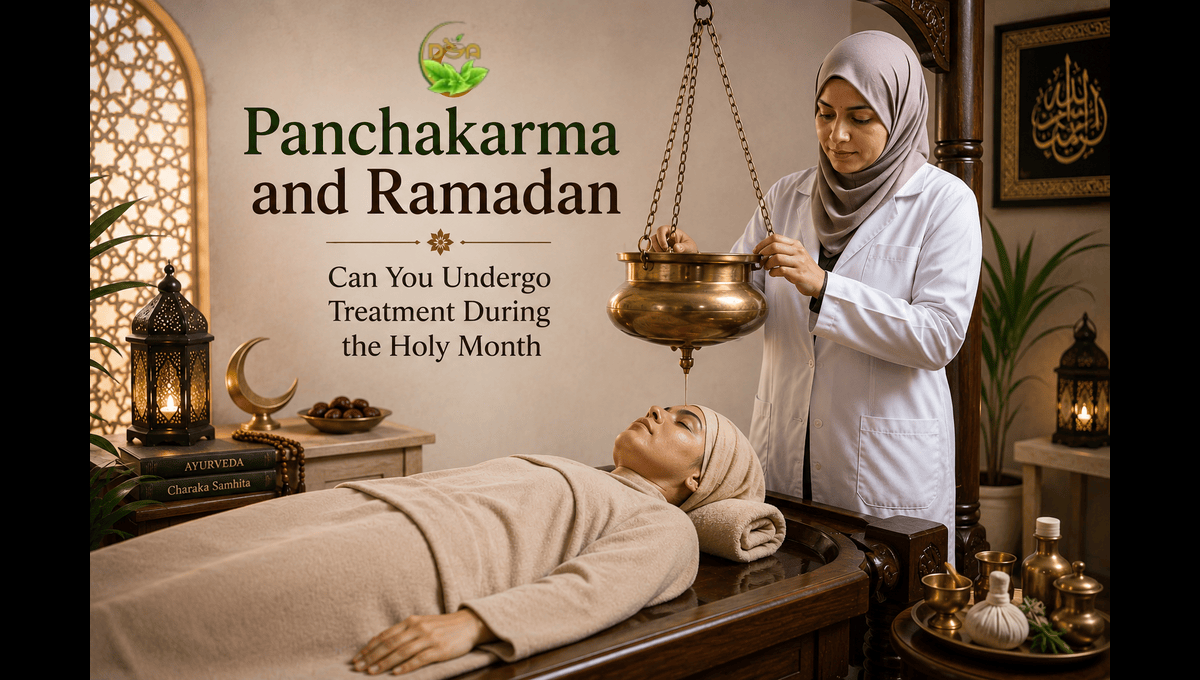
Can spiritual discipline and physical rejuvenation go hand-in-hand? It is a dilemma for those looking to embrace holistic health. As the Holy month of Ramadan is around the corner, there’s one common question that pops up in everyone’s mind - can the intensive, demanding Ayurvedic detoxification therapy known as Panchakarma be carried out while adhering to a fast?
Both fasting and panchakarma are rooted in the philosophy of mental and physical purification, and yet their approaches are significantly different. Ramadan emphasizes on spiritual temperance and intermittent fasting, Panchakarma can be defined as a clinically high intense, metabolically demanding adaptive restructuring of the body. To find out whether these two entirely different paths can be tread simultaneously, the needs and requirements of the body during both these processes must be carefully inspected.
In this blog, Dr Jasna’s clinic, an ayurvedic hospital in Dubai will give an insight on the pros and cons of undergoing Panchakarma treatment in Dubai during the Holy Month of Ramadan
To understand the feasibility and practicality of this combination, the foundational principles of each practice must be comprehended thoroughly.
During this month, indulgence in food and liquid is completely avoided from dawn (Suhoor) until dusk (iftar). This switch in circadian rhythm and calorie intake is designed and curated to decontaminate the soul and recalibrate the mind.
Also known as “five actions”, this is a multi-level restorative and rehabilitative process that is used to eliminate deep rooted toxins known as Ama from the human body. However, it cannot be considered as a mere spa treatment. It is a medical procedure that involves internal oleation, heat therapy and controlled elimination.
So, these are performed together, the body undergoes double stress, even though the purpose of both these practices are healing and rejuvenation, the physiological resources that are needed for the Panchakarma may be drained due to the fasting requirements of Ramadan.
According to ayurvedic principles, the success of Panchakarma depends on Agni (the digestive fire) During the initial stage of preparation (Purvakarma), meditated ghee is consumed in increasing amounts, and after this very light diet must be followed, preferably rice porridge at regular intervals when hunger is naturally felt.
If the individual is on a fast from dawn to dusk, the following setbacks may occur
Metabolic Confusion:
The internal oleation process needs continuous warmth and specific food triggers to move harmful toxins towards the digestive tract. But when the stomach is kept empty for a stretch of 15-16 hours, the movement of these toxins may get redirected or stalled, which can lead to further complications during treatment
In many Panchakarma treatments such as Swedana, which is known as a herbal steam therapy can cause heavy sweating and if fluids are not refilled until sunset, it creates a significant risk of dehydration and electrolyte imbalance.
Ayurvedic extracts, syrups and powders must be consumed by the patient multiple times a day, and the effectiveness and progress of these treatments can be slowed down if they are shortened between the little window between Iftar and Suhoor
Ayurvedic practitioners often refer to Panchakarma as “internal surgery without the use of a scalpel”. Therefore, it is a physically taxing and demanding process. During the stages of elimination such as Vamana (emesis) and Virechana (Purgation), the energy reserves of the body are significantly impacted.
Moreover, if the patient undergoes these treatments during a fast, they are bound to experience extreme fatigue and deep exhaustion. The principles of Ayurveda explicitly mentions that Panchakarma must only be performed when the individual possesses the required strength (Bala). Ramadan fasting can create a calorie deficit and cause a dip in overall strength, and eventually treatment will be counterproductive and have a negative impact on the individual, potentially leading to a “Vata Imbalance” defined by anxiety, insomnia and physical weakness.
While the complete, highly demanding “Shodhana” (cleansing) is not recommended during Ramadan, a few aspects of Ayurveda can be blended in as well. If the individual does not desire to push the pause button the treatment, they can go for a modified approach known as “Shamana” (palliative care) is often suggested by Ayurvedic experts.
This is the process of pouring warm oil over the forehead. It is considered to be an excellent remedy to manage stress and headaches associated with the initial days of fasting.
Nasal drops are administered to regulate and maintain respiratory health, but it should be performed outside of fasting hours.
When you choose to undergo any kind of medical procedure, it must be done under the guidance of experts. In the case of Panchakarma, an Ayurvedic physician must be consulted to understand the pros and cons of doing it during Ramadan fast.
In most cases, it is recommended that the demanding phases of Panchakarma treatment must be performed two weeks before Ramadan or after the celebration of Eid al-Fitr. This way, the body can harness the spiritual benefits of fasting without missing out on the physical recovery process required by the detoxification procedure.
To summarize, the end goals of Panchakarma and Ramadan are harmoniously aligned in their quest to attain purity, but pursuing them simultaneously can be physically daunting and stressful. The body needs proper nourishment and must stay hydrated while undergoing detox, but during fasting it is not possible to do so.
To make sure that the spiritual advantages of Ramadan and the healing potential of Panchakarma remain intact, individuals must adopt a staggered approach. The limitations of body and the divinity of the fast must be respected, therefore a state of true balance can be achieved.