In order to really appreciate how traditional medicinal systems evaluate and treat vertebral trauma, one must really take a look at the foundational principles and ground rules of Ayurveda, the time-tested ancient healing system that originated in India. It is also known as the science of life and longevity. The human body is governed and regulated by three fundamental bio-energetic sources known as Doshas, Vatta, Pitta and Kapha. Chronic back pain, particularly experiencing persistent discomfort in the lower back and lumbar regions is commonly construed as an expression of Vata derangement. Vata represents the elements of space and air, predominantly characterized by the foundational properties of dryness, lightness, coldness and motion. When an individual is consistently experiencing excessive physical strain, mental stress, scattered sleeping patterns or subjected to cold environmental conditions, Vata builds up excessively in the various channels of the musculoskeletal system. This piled up overload causes the natural synovial fluids to dry up and eventually leading to the depletion of the structural integrity of the spinal tissues and derails the smooth downward flow of energy, ultimately leading to the emergence of stiffness, spasms and persistent stabbing or dull aches that are typical of Vata imbalance.
In this blog, doctor Jasna’s Clinic, an ayurvedic hospital in Dubai, will explain getting an ayurvedic treatment in Dubai will be beneficial for people suffering from chronic back problems and how the treatment will help eliminate the recurring discomfort and pain.
Instead of going for a generalized treatment protocol to every individual patient, Ayurveda prioritizes on employing deep personalized treatment protocols according to the unique constitution of the patient, their lifestyle and disease pathogenesis. The healing framework is specially designed to restore and rejuvenate structural balance, replenish and sustain impoverished deep tissues and cleanse the internal metabolic toxins that create a hindrance for circulation. Key therapeutic pillars focus on the following foundational strategies:
Highly intensive cleansing treatments curated to get rid of deep seated toxins and revitalize the aggravated doshas right from the root.
Targeted and specialized oleation (internal and external oil application) coupled with therapeutic herbal sweating to soften tissues help the body relieve and relax from deep-seated muscle stress.
Re-establishing the body’s digestive fire (Agni) to make sure that optimal nutrient absorption takes place without any hassles, averting the piling up of ama (toxins) that tighten the joints.
Revitalizing tonics and botanical concoctions that are aimed at repairing and rebuilding cartilage, fortifying spinal ligaments and mitigating future degeneration and structural depletion.
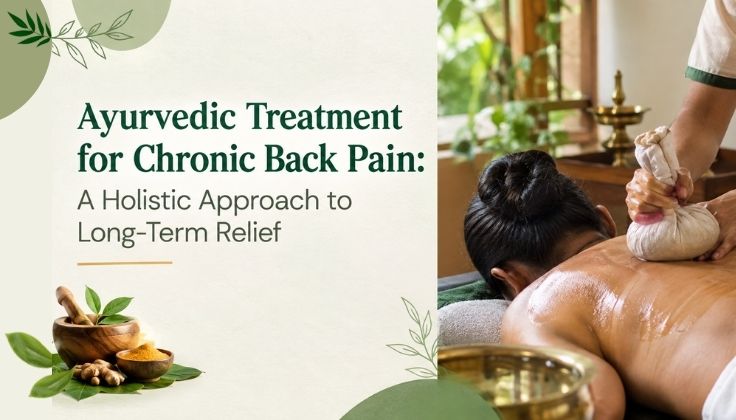
While dealing with recurring back problems, traditional Ayurveda employs specialized and dedicated external therapeutic therapies which come under Panchakarma and allied practices. One of the most renowned and recognized treatments for continuous back ailments is known as Kati Basti, a specialized procedure where a warm, medicated herbal oil is held over the pelvic and lower back region for designated period utilizing a boundary created from a black gram dough. The continuous warmth allows potent botanical compounds to sink deeply into the skin, penetrating the deeper tissue layers, eliminating localized inflammation, soothing hypersensitive nerves, improving articular lubrication and enhancing joint mobility. Another well known and powerful treatment modality is called the Abhyanga, a highly synchronized full body massage executed by employing warm medicated oils that are chosen specifically according to the patient’s dominant dosha. Therapies such as Pinda Sweda, where boluses filled with rice with medicinal properties, botanical agents and powders are massaged intensely across the back, to foster blood flow through peripheral channels, alleviate muscle contractions and restore elasticity to stiff supporting muscles.
External therapies work interdependently with internal herbal concoctions and dedicated dietary adjustments to ensure total rejuvenation and recovery. Powerful anti-inflammatory herbs such as Guggulu, Shallaki (Boswellia), Ashwagandha, and Turmeric form the structural foundation of Ayurvedic pharmacotherapy for back care. Guggulu and Shallaki are employed to eliminate inflammatory pathways without the long term negative effects that are associated with using painkillers.
Aswagandha acts as a powerful nervine syrup that helps in reinforcing and bolstering the nervous system and aiding structural recovery. At the same time nutritional modifications are instrumental in maintaining the balanced Vata Dosha. Patients are routinely advised to have warm, freshly prepared, nourishing staples infused and enriched with healthy fats such as pure cow’s ghee or sesame oil, while scrupulously minimizing the consumption of cold, dry, raw and gas-forming edible items that exacerbate internal inflammation, pain and stiffness.
At the end of the day, managing severe back pain via an Ayurvedic center in Dubai actually provides a monumental paradigm shift from conventional temporary suppression of symptoms to deep sustainable healing that effectively balances and synchronizes the body’s natural bio-energies, nourishes and nurtures the depleted musculoskeletal system and equips people to regain their lost physical freedom and strength in the most natural manner.