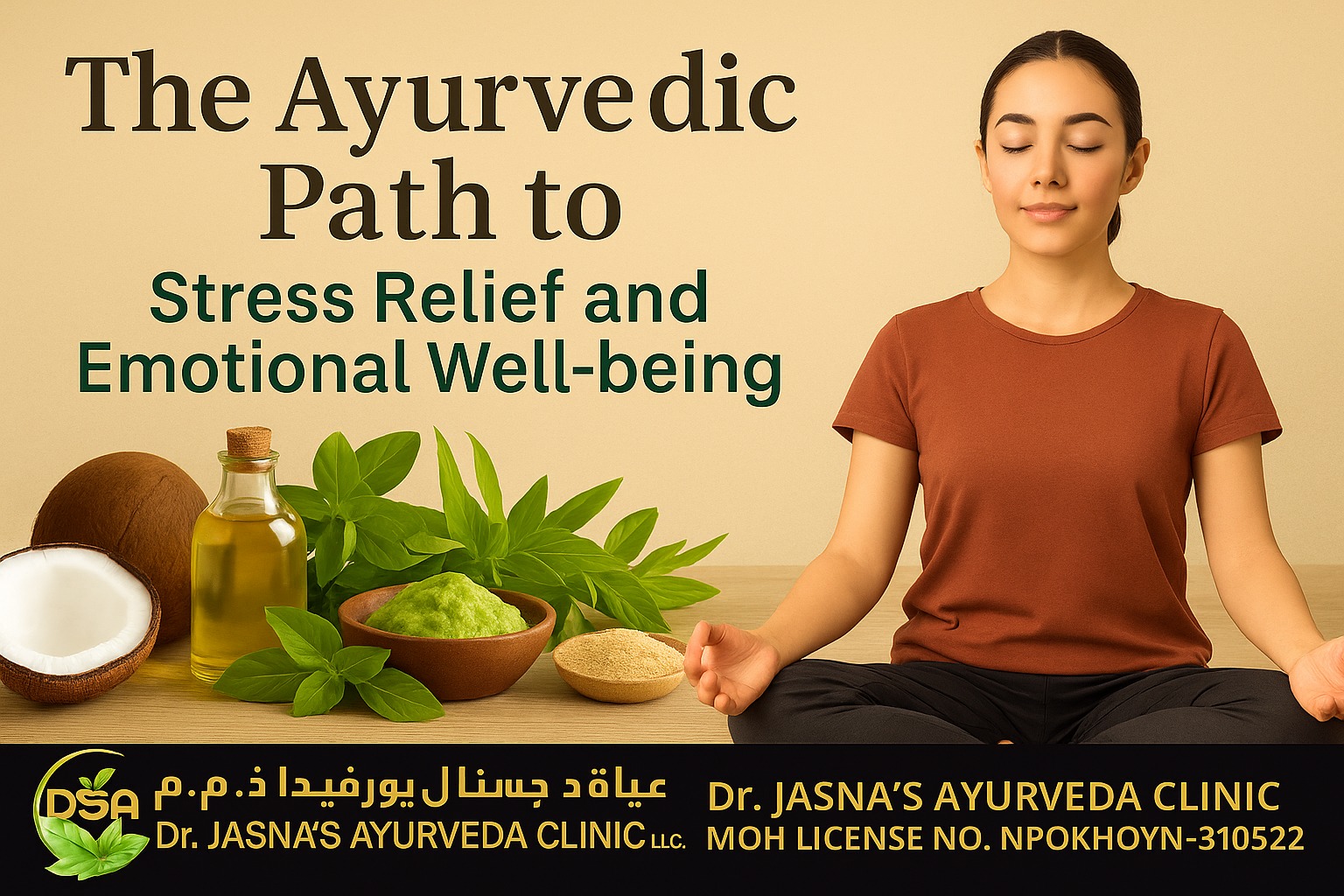
In today’s fast-paced world, stress and emotional imbalances have become unavoidable companions of modern living. While short-term stress can sometimes motivate us to act, long-term stress and poor emotional well-being take a significant toll on our physical and mental health. Ayurveda, the ancient science of life, offers profound insights and time-tested remedies for managing stress and cultivating emotional balance. Unlike conventional approaches that often focus only on symptoms, Ayurveda addresses the root causes of stress and helps restore harmony between the mind, body, and spirit.
In this blog, we will explore Ayurvedic wisdom, therapies, diet, herbs, and lifestyle practices that can guide you toward stress-free living and emotional well-being.
According to Ayurveda, stress arises when there is an imbalance of the three doshas—Vata, Pitta, and Kapha. Each dosha plays a unique role in shaping our physical constitution and mental tendencies.
Vata Imbalance (Air & Ether): Causes anxiety, fear, restlessness, and overthinking.
Pitta Imbalance (Fire & Water): Leads to anger, irritability, perfectionism, and frustration.
Kapha Imbalance (Earth & Water): Results in lethargy, sadness, attachment, and depression.
When these energies move out of balance due to lifestyle, diet, or environmental stressors, the mind and emotions suffer. Ayurveda helps us identify which dosha is disturbed and provides personalized strategies to restore balance.
Stress manifests differently in each individual. Common signs include:
Constant worry and racing thoughts
Irritability and anger outbursts
Insomnia or poor sleep
Low energy and lack of motivation
Loss of appetite or overeating
Digestive issues like acidity, bloating, or constipation
Feeling overwhelmed or helpless
Withdrawal from social activities
Anxiety attacks or persistent sadness
By becoming aware of these early signs, one can take proactive steps through Ayurvedic practices to restore calm and stability.
Ayurveda emphasizes holistic well-being by focusing on balancing the body, calming the mind, and uplifting the spirit. Its approach includes:
Herbal Support
Herbs like Ashwagandha, Brahmi, Shankhpushpi, and Jatamansi act as natural adaptogens. They strengthen the nervous system, reduce cortisol levels, and enhance emotional resilience.
Dinacharya (Daily Routine)
A consistent daily routine aligned with natural rhythms helps regulate mental and physical functions. Waking up early, practicing yoga, and eating at regular times stabilize the mind.
Pranayama (Breathing Exercises)
Breathing practices such as Anulom Vilom, Bhramari, and Nadi Shodhana calm the nervous system and reduce anxiety.
Meditation and Mindfulness
Ayurveda emphasizes meditation to silence the restless mind, enhance self-awareness, and cultivate inner peace.
Abhyanga (Oil Massage)
Daily self-massage with warm herbal oils nourishes the body, reduces Vata imbalance, and induces relaxation.
Proper Sleep (Nidra)
Adequate and quality sleep is considered one of the pillars of health in Ayurveda. A nighttime routine, herbal teas, and oil massages promote restful sleep.
Food plays a crucial role in mental health. Ayurveda recommends sattvic foods to calm the mind and uplift emotions.
Warm milk with turmeric or nutmeg
Fresh fruits like bananas, apples, and sweet mangoes
Leafy greens and seasonal vegetables
Ghee, almonds, walnuts, and pumpkin seeds
Herbal teas with chamomile, tulsi, or brahmi
Whole grains like rice, oats, and quinoa
Excess caffeine and alcohol
Spicy, oily, and fried foods
Processed and packaged snacks
White sugar and refined flour
Eating mindfully, at regular times, and in a peaceful environment helps nourish both body and mind.
Ayurveda’s treasure trove of herbs offers natural solutions for mental and emotional balance:
Ashwagandha: Reduces cortisol, calms anxiety, and boosts energy.
Brahmi: Enhances memory, focus, and clarity while reducing stress.
Shankhpushpi: Improves concentration and eases nervous tension.
Jatamansi: Promotes restful sleep and balances emotions.
Tulsi (Holy Basil): Lowers stress hormones and strengthens immunity.
Gotu Kola: Supports mental clarity and reduces fatigue.
These herbs, when taken under Ayurvedic guidance, can be life-changing in managing stress.
Ayurveda and Yoga are deeply interconnected. Specific yoga postures help release tension, open energy channels, and quiet the mind.
Balasana (Child’s Pose): Relaxes the nervous system.
Viparita Karani (Legs-Up-the-Wall Pose): Reduces fatigue and calms the mind.
Shavasana (Corpse Pose): Encourages complete relaxation.
Setu Bandhasana (Bridge Pose): Stimulates the nervous system and reduces depression.
Sukhasana with Pranayama: Brings peace and emotional stability.
Practicing yoga daily harmonizes body and mind, leading to long-term emotional balance.
Ayurveda emphasizes simple but powerful lifestyle changes:
Morning Rituals: Start the day with meditation, yoga, and a light breakfast.
Nature Connection: Spend time outdoors, walking barefoot on grass, or watching the sunrise.
Digital Detox: Reduce screen time to calm the mind.
Gratitude Practice: Write three things you’re grateful for daily.
Creative Expression: Engage in music, art, or journaling for emotional release.
Positive Company (Satsang): Surround yourself with supportive, uplifting people.
Panchakarma and other Ayurvedic therapies offer deep cleansing and relaxation:
Shirodhara: Continuous pouring of warm oil on the forehead to calm the mind.
Abhyanga: Full-body oil massage to reduce tension.
Nasya: Herbal oil therapy for mental clarity.
Swedana (Steam Therapy): Relieves stiffness and promotes relaxation.
Takra Dhara: Buttermilk therapy for insomnia and anxiety.
These therapies rejuvenate the nervous system and help restore emotional balance.
Recent studies confirm the effectiveness of Ayurvedic practices:
Ashwagandha significantly reduces cortisol levels.
Meditation and yoga lower blood pressure and enhance mental resilience.
Ayurvedic oils like sesame and brahmi improve sleep quality.
Thus, Ayurveda beautifully integrates with modern science to offer holistic stress management.
Stress is an inevitable part of life, but suffering is optional. By following Ayurvedic wisdom—balancing doshas, eating mindfully, practicing yoga and meditation, using herbs, and adopting healing rituals—you can restore inner peace and cultivate long-lasting emotional well-being. Ayurveda teaches us that true health is not the absence of disease but the presence of harmony between body, mind, and spirit.
If stress and emotional challenges feel overwhelming, professional Ayurvedic consultation can guide you with personalized treatment, diet, and lifestyle adjustments. Healing is always possible, and Ayurveda provides the roadmap.